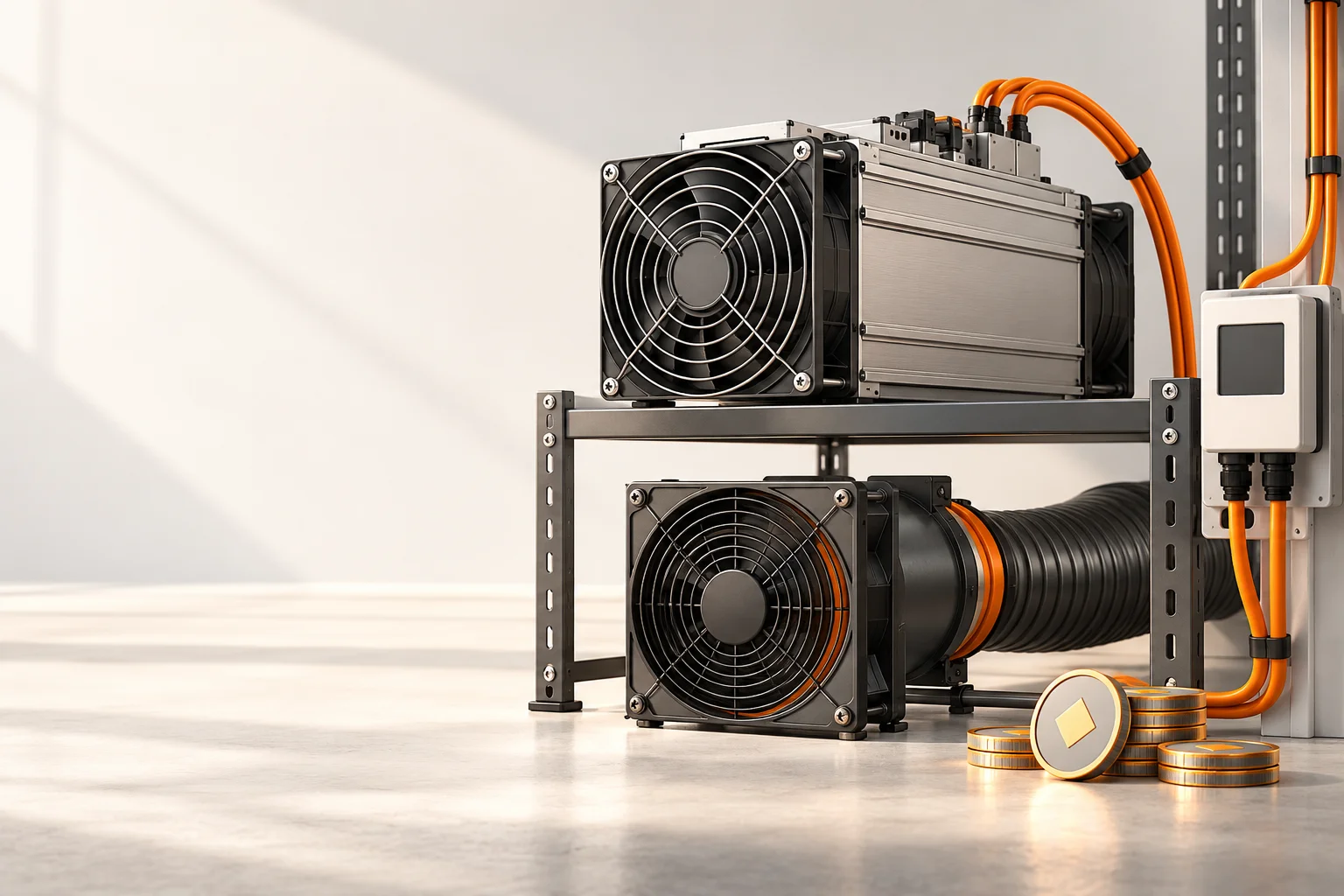
The miner is not the whole load
Fans, pumps, air-conditioning equipment, networking, and other auxiliaries can consume energy outside a miner’s specified input draw. A miner-only electricity estimate should state that boundary. A whole-site estimate needs the additional loads that serve the installation.
Cooling needs vary with equipment, climate, airflow, and site design. A fixed overhead percentage is an assumption, not a universal property of mining. Use measured energy or an engineering estimate for your site, and avoid adding internal miner fans twice if they are already included.
Step-by-step
- Draw the boundary. List which loads are already covered by the miner’s input measurement and which are separately supplied.
- Measure or model auxiliaries. Record their draw, operating time, control behavior, and allocation if shared with other activities. Include seasonal scenarios.
- Combine consistently. Add miner and auxiliary kWh over the same period before applying the relevant tariff. Keep each term visible for later reconciliation.
Worked example
Illustrative example. A hypothetical miner uses 72 kWh/day and its dedicated auxiliary equipment uses 12 kWh/day. Combined consumption is 84 kWh/day. At USD 0.10/kWh, that energy charge is USD 8.40/day.
The additional USD 1.20 is missing from a miner-only USD 7.20 estimate. Fixed or demand charges still require their own tariff treatment.
Common mistakes
- Adding internal fan draw a second time.
- Assuming all climates need the same cooling overhead.
- Using a site-wide energy total to claim chip-level efficiency.
Questions and answers
Can I allocate shared cooling equally to every miner?
You can use a disclosed allocation method, but it may not reflect each load’s contribution. Choose a method appropriate to the planning question and keep the total reconciled to site measurements.
Apply this to your setup
List each auxiliary load, whether it is already inside the miner reading, and the period it operates. Reconcile the combined energy to an appropriate site meter. If cooling serves other activities too, show the allocation method separately. A site-energy ratio should never be presented as a manufacturer’s chip-efficiency specification.
Sources and next steps
Read airflow planning and energy reconciliation.
How this guide was prepared: AI-generated drafting with the linked technical references and illustrative calculations. It does not report first-hand equipment tests or a named specialist review.