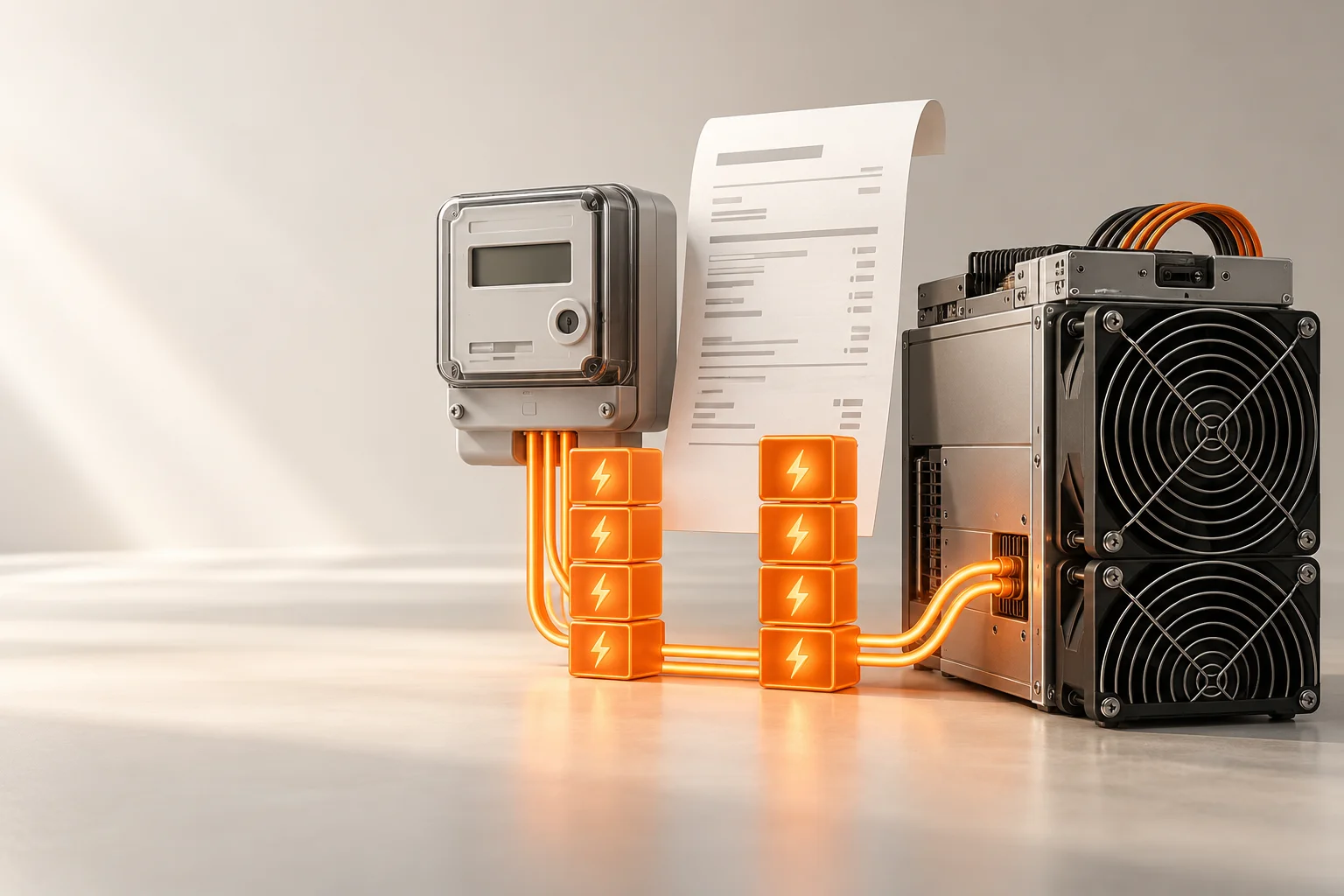
Reconcile quantities before costs
A modeled electricity expense can differ from a bill because of measurement boundaries, billing periods, operating states, auxiliaries, or tariff terms. Compare energy quantities first, then apply the charges. Otherwise a price difference can conceal a consumption error.
Keep meter timestamps and units aligned. A whole-site bill includes loads that a miner dashboard may not measure. Likewise, a calendar month estimate may use 30 days while the utility reads a different interval. Neither difference automatically proves a faulty meter.
Step-by-step
- Align the period. Use the invoice’s start and end readings and the corresponding equipment logs. Note gaps, timezone changes, and startup dates.
- Align the boundary. Add miner, auxiliary, idle, and other included energy. Identify shared loads and document any allocation method.
- Explain the residual. Compare expected and metered kWh, then reconcile tariff line items. Investigate unexplained material differences with suitable professionals or the utility.
Worked example
Illustrative example. A hypothetical 30-day miner estimate is 2,160 kWh. A 31-day billing interval at the same continuous draw is 2,232 kWh, a 72 kWh difference before any cooling or other loads.
An apparent discrepancy can come entirely from the date range. Document that explanation before diagnosing hardware or changing operating assumptions.
Common mistakes
- Comparing a 30-day model to a longer billing interval.
- Using currency totals to diagnose energy quantities.
- Ignoring other loads served by the billed meter.
Questions and answers
Should I overwrite the original estimate after reconciliation?
Keep the original assumptions and actual readings, then create a revised baseline. Preserving both helps explain forecast errors and supports later decisions without rewriting history.
Apply this to your setup
Build a reconciliation with invoice dates, meter readings, equipment-state intervals, auxiliary consumption, and each tariff charge. Explain differences in quantities before differences in prices. Preserve an unresolved balance rather than forcing the estimate to match. A revised baseline should show the evidence that changed the previous assumptions.
Sources and next steps
See tariff interpretation and whole-site overhead.
How this guide was prepared: AI-generated drafting with the linked technical references and illustrative calculations. It does not report first-hand equipment tests or a named specialist review.