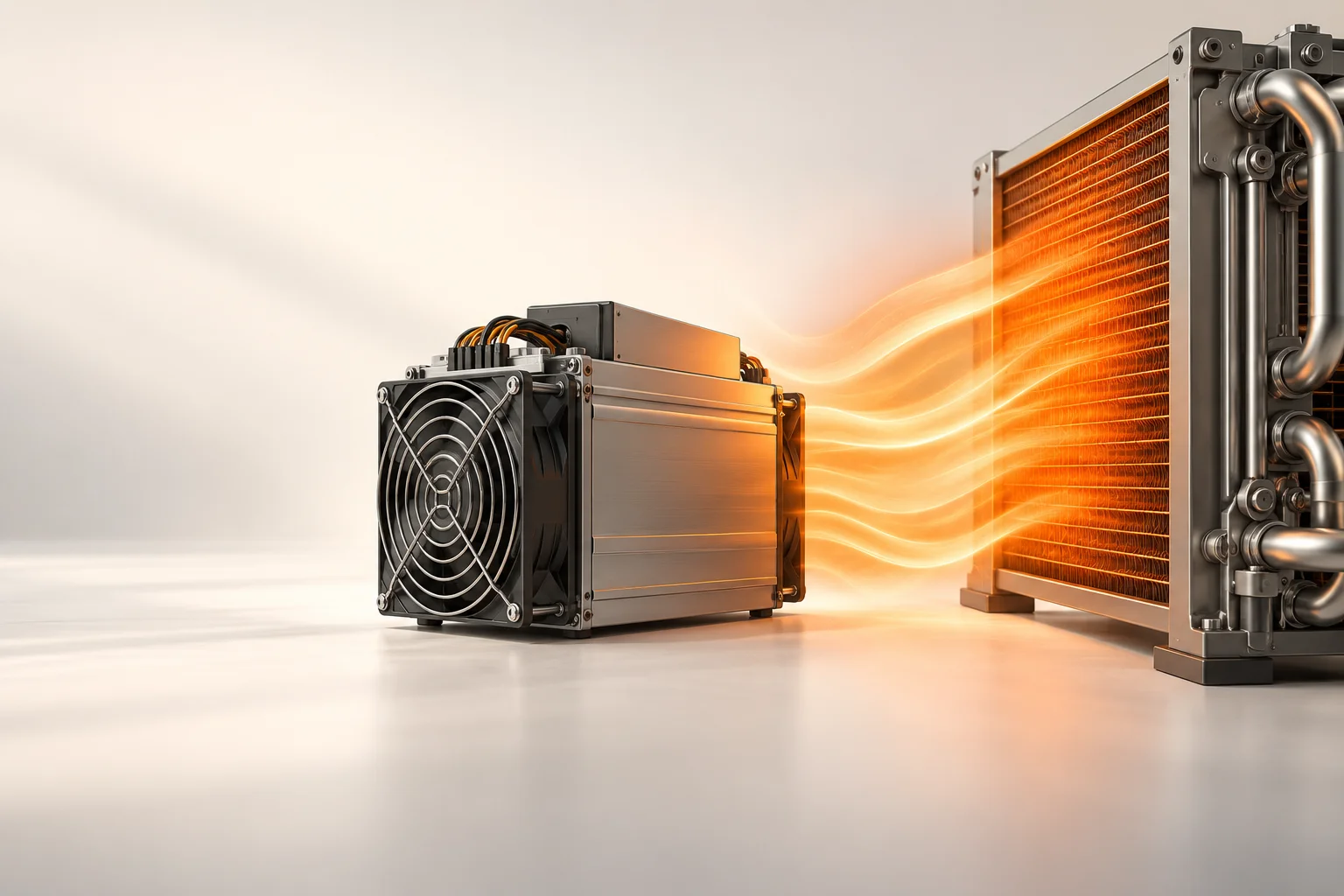
Treat sustained input as a sustained heat load
Mining equipment turns almost all of its electrical input into heat in or around the installation. For early site planning, a continuous kilowatt of electrical load is approximately a kilowatt of heat to manage, before adding auxiliary equipment.
Heat removal depends on airflow or the manufacturer’s specified liquid-cooling system, ambient conditions, and installation design. A room’s apparent size does not establish that it can reject the load. Use model-specific requirements and a qualified cooling assessment for installation decisions.
Step-by-step
- Inventory the inputs. Record each miner’s operating mode and expected electrical draw, plus other equipment releasing heat into the space.
- Trace the path. Identify intake and exhaust locations, separation, and possible recirculation. Follow required clearances and avoid unsupported duct restrictions.
- Validate conditions. Compare inlet measurements with the model’s permitted range during a controlled trial. Establish alarms and a supported shutdown plan.
Worked example
Illustrative example. Three hypothetical miners each draw 3 kW continuously. Their approximate combined heat load is 9 kW, excluding site auxiliaries. Ventilation must manage that load under the relevant outdoor conditions.
This is a heat-load estimate, not an airflow specification or a safe installation approval. Required flow and temperatures depend on the equipment and engineered system.
Common mistakes
- Treating an open window as proof of adequate cooling.
- Recirculating hot exhaust directly into another intake.
- Using one model’s temperature limits for every miner.
Questions and answers
Can I use the heat for another purpose?
Potentially, but heat reuse needs its own controls, seasonal demand, safety assessment, and economics. Do not count avoided heating costs without a workable documented design.
Apply this to your setup
Prepare a heat-load inventory with operating draw, equipment count, auxiliary loads, and indoor heat release. Give it to the cooling professional with expected ambient conditions and model requirements. The output of this worksheet is a design input, not an airflow approval; do not infer a suitable fan or duct from kilowatts alone.
Sources and next steps
Continue with airflow and temperature monitoring.
How this guide was prepared: AI-generated drafting with the linked technical references and illustrative calculations. It does not report first-hand equipment tests or a named specialist review.