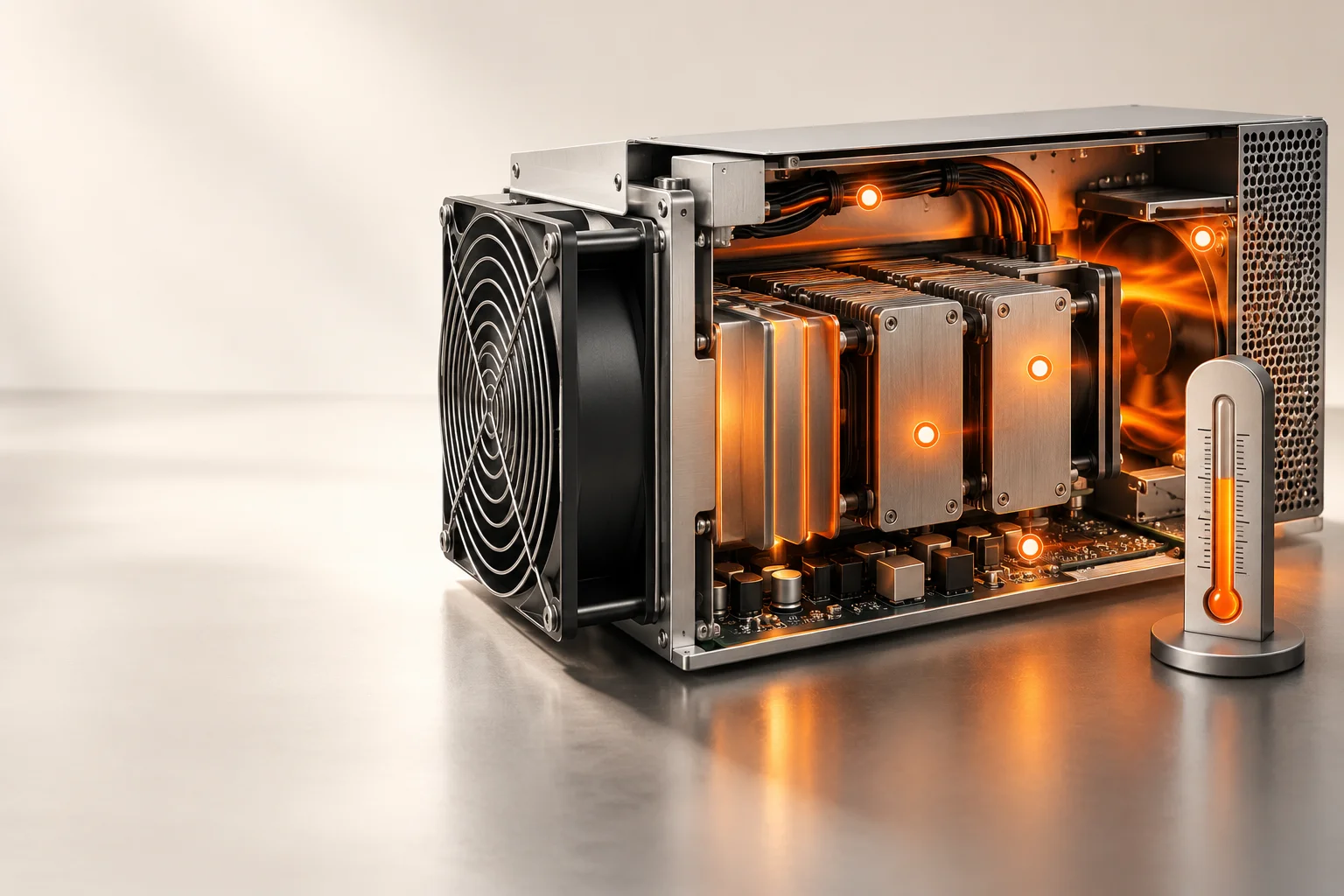
Sensor location changes the meaning
Ambient air, inlet air, exhaust air, board, and chip temperatures describe different points in a system. Manufacturer limits apply to specified measurements and conditions. A threshold copied from another device or sensor type can give false reassurance or unnecessary alarms.
Create a baseline for the exact model and operating mode. Record ambient conditions, firmware, fans, workload, and sensor labels together. Changes in these readings can identify a developing issue, but a temperature alone does not determine the cause.
Step-by-step
- Map sensors and limits. Use the model’s documentation to identify available measurements and supported operating conditions. Keep sensor names beside every threshold.
- Record a stable baseline. Observe normal startup and sustained operation, including inlet conditions and fan behavior. Preserve timestamps and fault codes.
- Define responses. Assign who receives alerts and which supported shutdown or isolation procedure applies. Investigate cooling, dust, fan, and sensor issues safely.
Worked example
Illustrative example. A hypothetical log reports 35°C inlet air and a higher chip reading. Comparing the chip number directly with an inlet-air limit is invalid; each measurement needs its own supported interpretation.
This example deliberately provides no universal safe chip threshold. Refer to the exact model and sensor rather than guessing from a generic mining article.
Common mistakes
- Applying one miner’s limits to a different model.
- Measuring room temperature far from the intake.
- Silencing alarms instead of investigating persistent deviations.
Questions and answers
Does a normal temperature prove everything is healthy?
No. Check accepted work, power, fans, error logs, and other relevant evidence. Some faults do not initially create a temperature alarm, and a faulty sensor can mislead.
Apply this to your setup
Build a sensor register with location, model-specific limit, source document, expected baseline, alert owner, and response. Record changes in inlet conditions separately from changes in chip or board readings. Never transfer a numeric threshold between sensor types or models merely because their dashboards use the same word for temperature.
Sources and next steps
Read airflow planning and monitoring baselines.
How this guide was prepared: AI-generated drafting with the linked technical references and illustrative calculations. It does not report first-hand equipment tests or a named specialist review.