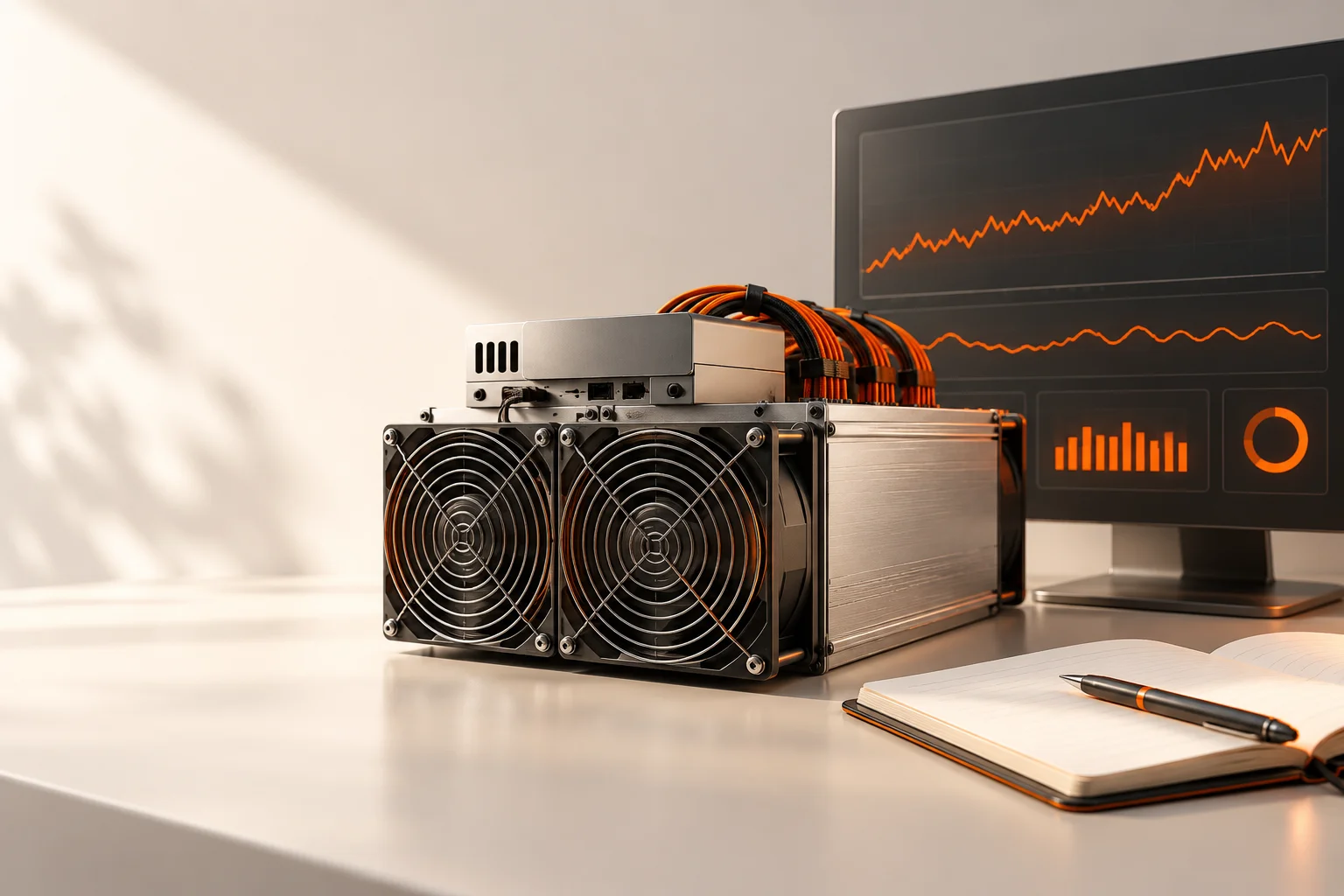
Normal operation needs a defined context
A monitoring baseline records how the miner behaves under known supported conditions. Include model, firmware, mode, environment, supply, and observation period. Without that context, a later metric change can look like a fault when it reflects an intentional configuration change.
Local and pool measurements answer different questions. Local hashrate shows device activity; pool accepted work shows credited contribution over a provider-defined window. Temperatures, fans, errors, and power help explain the gap. Preserve each measurement’s units and source.
Step-by-step
- Capture stable conditions. Observe a commissioned machine after supported startup. Record configuration and environment with repeated measurements or logs.
- Choose actionable alerts. Use manufacturer limits and changes from the baseline, then define who receives each alert and what safe response follows.
- Review changes. Annotate firmware updates, pool switches, maintenance, and outages. Compare equivalent windows and preserve evidence before restarting or changing settings.
Worked example
Illustrative example. A hypothetical miner’s local hashrate remains stable while pool accepted work falls during a connection outage. The paired metrics identify a contribution problem that a local-rate-only alert would miss.
Monitoring should include the path from device work to credited output. No single green dashboard metric establishes complete healthy operation.
Common mistakes
- Comparing a startup minute with a stable daily average.
- Creating alerts with no assigned response owner.
- Deleting logs before an unexplained recurring fault is investigated.
Questions and answers
How often should I review the baseline?
Review after material configuration, site, or equipment changes and periodically during operation. Frequency depends on the installation and risk; preserve prior versions so changes remain traceable.
Apply this to your setup
Create a baseline record with model, mode, firmware, environment, power boundary, local rate, accepted-work window, errors, and sensor readings. Annotate maintenance and configuration events on the same timeline. Alerts should point to an owner and a response; a threshold without a safe action plan adds noise without resolving faults.
Sources and next steps
Use temperature monitoring and availability metrics.
How this guide was prepared: AI-generated drafting with the linked technical references and illustrative calculations. It does not report first-hand equipment tests or a named specialist review.