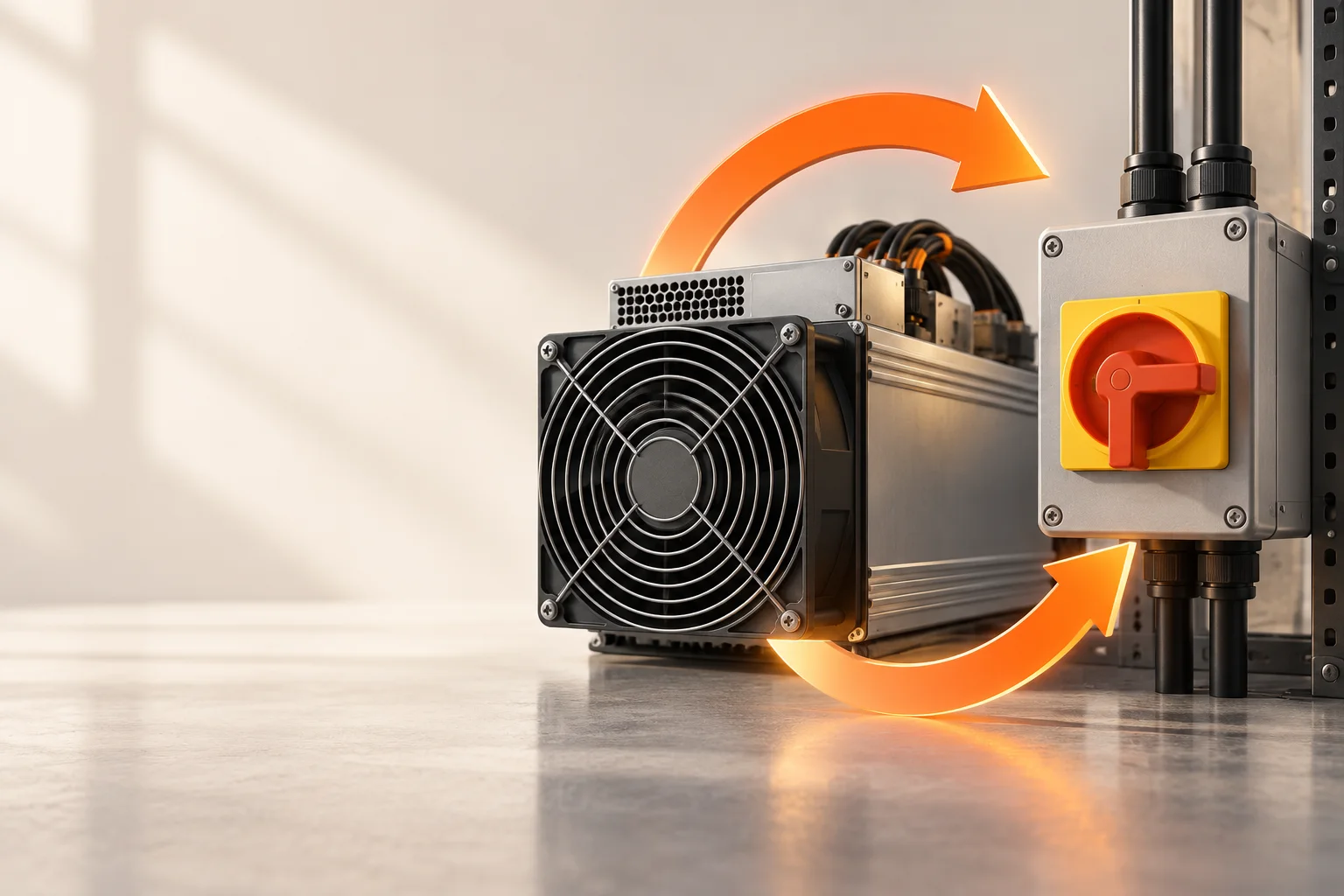
A routine restart is not fault repair
A miner’s shutdown, cool-down, isolation, and startup behavior depends on its design and installation. Follow its manual and your site’s approved procedure. Cycling power repeatedly is not a substitute for diagnosing overheating, damaged cables, or electrical faults.
Routine software shutdown and electrical isolation are different actions. Qualified personnel must handle work that requires electrical access. A stopped dashboard does not prove equipment is safely isolated, and a resumed hashrate does not prove a recurring fault was fixed.
Step-by-step
- Record the reason. Capture relevant logs and decide whether the event is routine maintenance, a software change, or a fault needing qualified attention.
- Use the approved stop. Follow supported cooling and shutdown steps and the site’s isolation procedure when work requires it. Never bypass protection devices.
- Verify the restart. Confirm supply and cooling readiness, configuration, firmware state, temperatures, stable local hashrate, and pool acceptance. Record remaining warnings.
Worked example
Illustrative example. A hypothetical miner resumes hashing after a restart but repeats the same temperature alarm. The operator stops the repeated restart cycle and investigates the cooling problem under the site’s safe procedure.
Recovery of the visible metric is only one check. Repeated faults need an explanation and corrective action before normal operation is accepted.
Common mistakes
- Treating software stop as verified electrical isolation.
- Rebooting repeatedly after signs of damaged supply components.
- Restarting a fleet without checking cooling readiness.
Questions and answers
Should every miner use the same restart delay?
No. Use the exact manufacturer’s procedure and site design, including any staged startup requirements. A universal time interval can conflict with equipment needs.
Apply this to your setup
Maintain separate checklists for routine stop, verified electrical isolation, and restart acceptance. Include model-specific cooling steps and who is qualified to perform each action. Preserve fault evidence before a restart where safe. A repeated alarm after restart leaves the incident unresolved even if the device briefly returns to its normal hashrate.
Sources and next steps
Continue with site commissioning and availability reporting.
How this guide was prepared: AI-generated drafting with the linked technical references and illustrative calculations. It does not report first-hand equipment tests or a named specialist review.