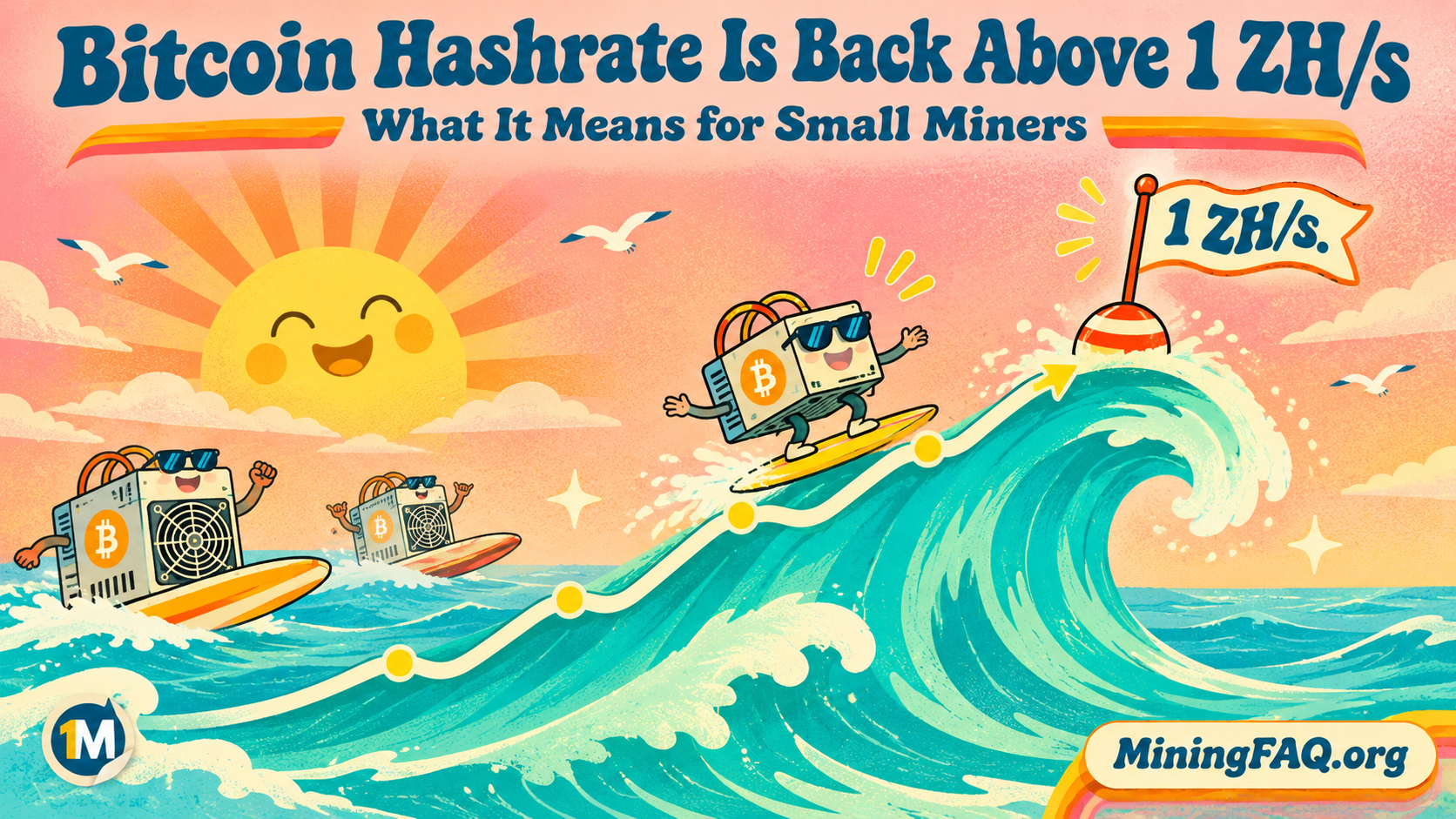
In October 2026, the Bitcoin network crossed an important milestone again. The seven-day average hashrate moved back above 1 zettahash per second (1 ZH/s)—1,000 exahashes, or one sextillion hashes every second. Hashrate reached about 1,088 EH/s on October 26, its highest level since December 29, 2025.
For Bitcoin’s security, that is a strong signal. More active hashrate generally makes proof-of-work attacks more difficult and expensive, all else equal. But the October rebound was not a new all-time hashrate record; the seven-day average previously reached roughly 1,156 EH/s in October 2025.
For small miners, the story is more complicated. More network hashrate usually leads to higher difficulty, meaning every fixed amount of mining hardware represents a smaller share of the competition. And this rebound has happened while Bitcoin is still trading around 38% below its October 2025 all-time high.
This guide breaks down what happened, why hashrate returned so quickly, what the latest difficulty and hashprice numbers mean for individual machines, and what small miners can realistically do about it.
Key Takeaways
- The seven-day average Bitcoin hashrate crossed 1,000 EH/s on October 11 and reached about 1,088 EH/s on October 26. As of November 4, it remains above the milestone at roughly 1.04 ZH/s.
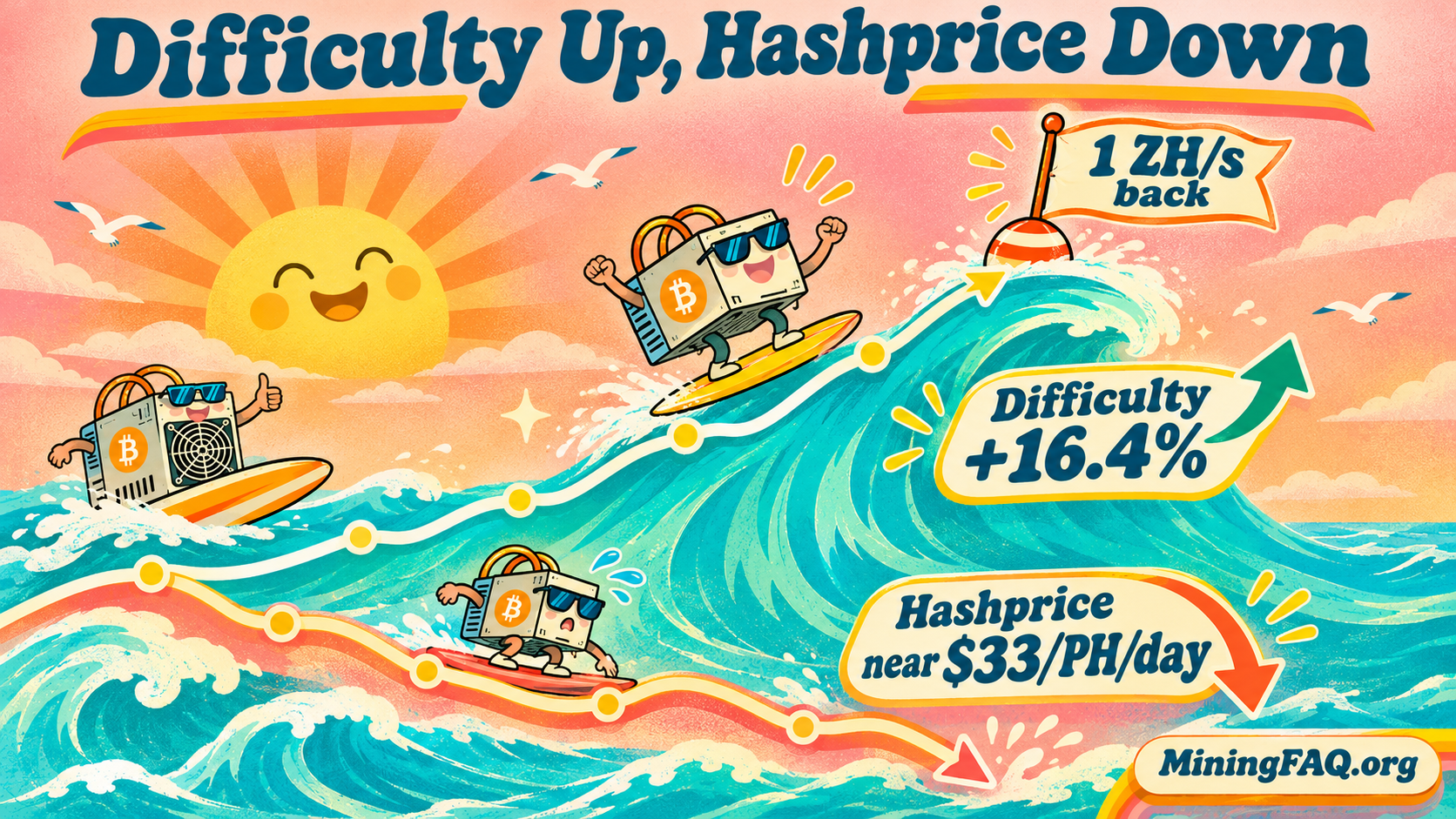
- Bitcoin difficulty rose 5.92% to 140.58T on October 16 and another 5.54% to 148.36T on October 29. From the 127.45T level set on September 5, that represents a cumulative increase of about 16.4%.
- Hashprice fell from above $40/PH/day in late September to roughly $34 immediately after the October 29 adjustment, and has since slipped to around $33/PH/day as of November 4.
- The two major October difficulty increases reduced expected BTC output per unit of hashrate by roughly 10.5%, all else equal.
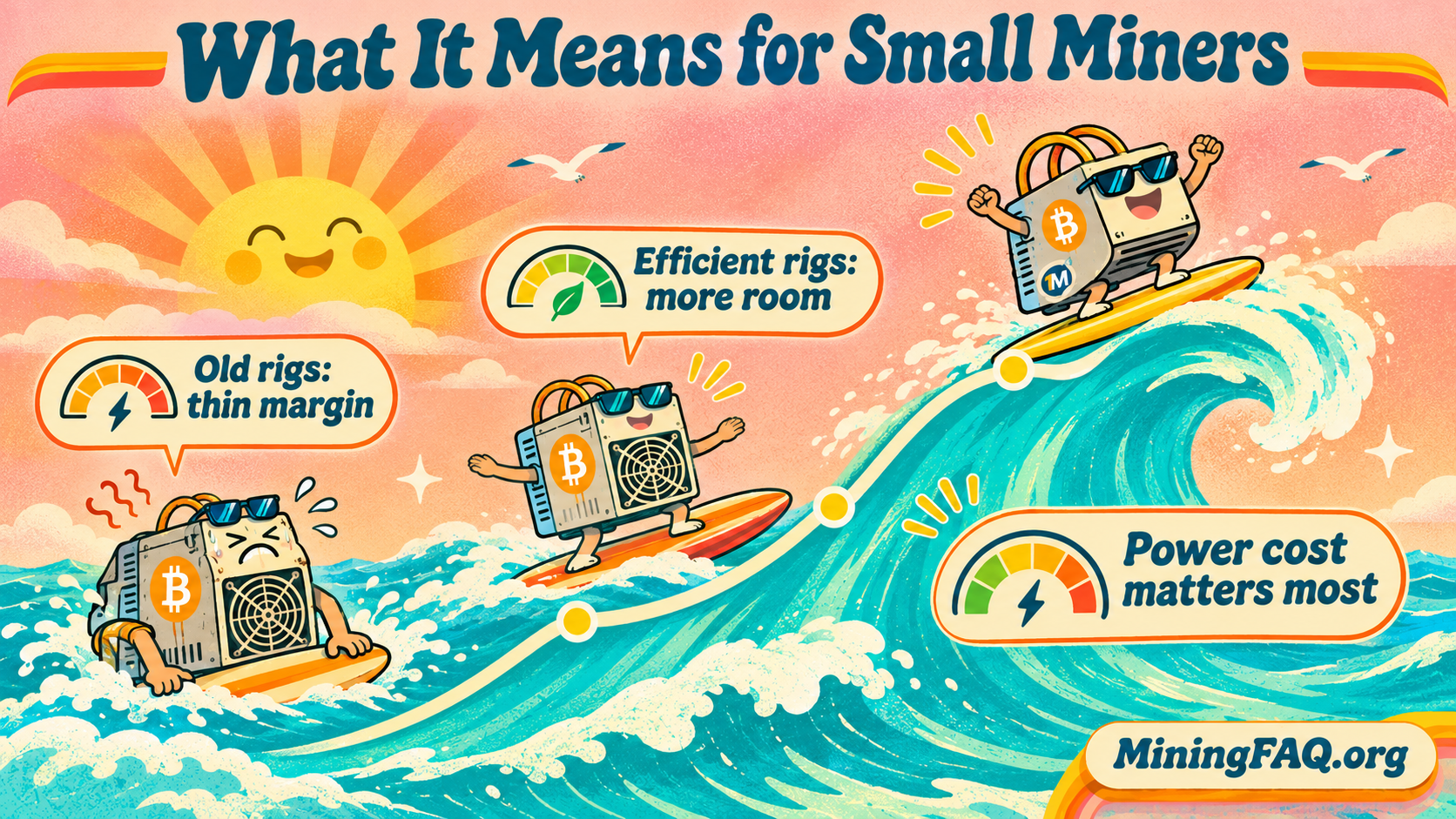
- Older machines such as the S19j Pro now have very little electricity-cost margin, while efficient machines such as the S21 XP and S23 Hydro retain substantially more room at low hosting rates.
- Small miners should focus less on the symbolic 1 ZH/s headline and more on efficiency, electricity price, uptime and hardware cost.
What Is Hashrate, and Why Does 1 ZH/s Matter?
Hashrate is the total computing power that all miners point at the Bitcoin network. Every machine is racing to find a valid block, and the network’s combined guessing speed is measured in hashes per second.
To keep blocks arriving about every 10 minutes, Bitcoin adjusts its difficulty every 2,016 blocks, roughly every two weeks. When hashrate rises, blocks come faster, so difficulty goes up to slow them back down. When hashrate falls, difficulty drops.
The 1 ZH/s line is mostly symbolic, but it’s a useful milestone. Bitcoin first crossed it in 2025, then fell well below it during 2026 when prices and miner margins dropped. Getting back above it tells us that miners are confident enough to plug machines back in, or to plug new ones in for the first time.
What Happened in October 2026
According to Hashrate Index’s analysis of Bitcoin’s return above 1 ZH/s, the seven-day average crossed 1,000 EH/s on October 11 and remained above that level through the end of October.
Difficulty followed the hashrate rebound:
| Date | Change | New difficulty |
|---|---|---|
| September 5, 2026 | +1.31% | 127.45T |
| September 19, 2026 | +4.16% | 132.76T |
| October 3, 2026 | −0.03% | ~132.72T |
| October 16, 2026 | +5.92% | 140.58T |
| October 29, 2026 | +5.54% | 148.36T |
| October 29, 2025 record | — | 155.97T |
From September 5’s 127.45T to October 29’s 148.36T, difficulty increased about 16.4%. The current level remains roughly 5% below the all-time record.
Hashprice moved in the opposite direction. It was above $40/PH/day in late September, fell to about $35.91 by October 26 and dropped to roughly $34 following the October 29 difficulty adjustment. As of November 4, spot hashprice is around $33/PH/day.
That means miners have gone from one of 2026’s stronger revenue periods to a noticeably tighter environment in only a few weeks.
Difficulty is now only about 5% below its all-time record. Meanwhile, hashprice, which is the expected revenue per unit of hashrate per day, has moved the other way:
| Date | Hashprice (USD per PH/s per day) |
|---|---|
| October 2025 peak | ~$46 |
| June 6, 2026 (low) | ~$27.74 |
| September 25, 2026 | ~$40.42 |
| October 25, 2026 | ~$36.04 |
| After October 29 adjustment | ~$34 |
So miners just went from one of the best stretches of 2026 to a noticeably tighter one in about five weeks.
Why Did Hashrate Come Back So Fast?
A few things came together at once.
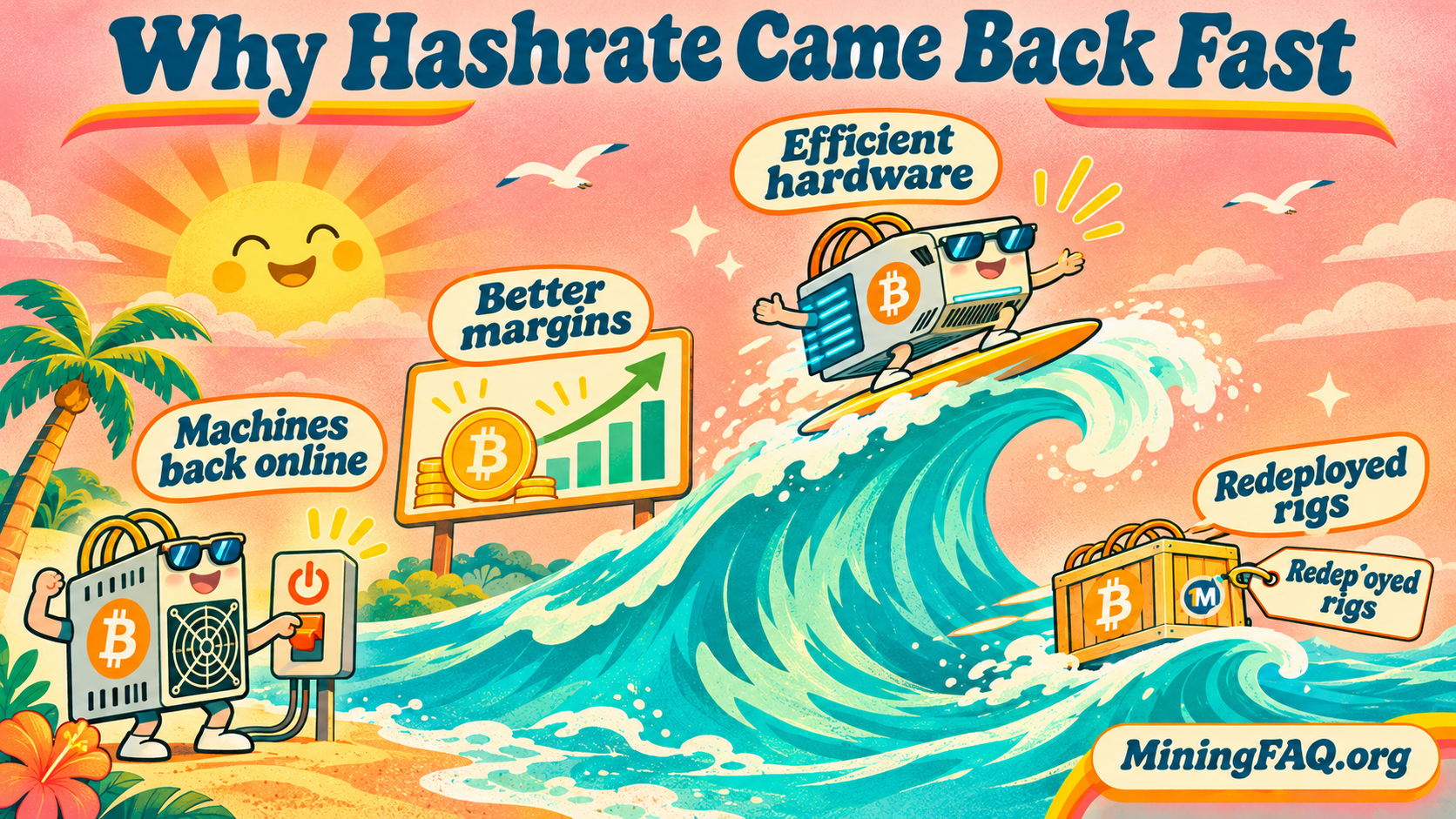
1. Curtailed machines came back online. During the Texas summer, many large miners power down during peak demand periods to cut costs and earn grid credits. Hashrate Index points to ERCOT’s peak-demand season, with peaks on June 18, July 22, August 24 and September 12, as a major reason hashrate sagged over the summer. Once that season ended, those machines switched back on.
2. Better economics in September. Bitcoin recovered from its June low near $59,000, and September became miners’ best revenue month since January. Better margins pull idle machines out of storage.
3. New, more efficient hardware. Every new generation of ASICs delivers more terahashes for the same power. As Hashrate Index put it, “Crossing 1 ZH/s with Bitcoin’s price still a third below its all-time high says something about fleet efficiency.”
4. The AI shift didn’t free up as much room as expected. Many public mining companies have moved part of their power capacity to AI and high-performance computing. Cointelegraph reported that public miners’ realized hashrate fell 23% while their AI and HPC revenue rose 52% quarter over quarter. But the machines they unplugged, worth an estimated $1.5 billion, didn’t disappear. Many were sold secondhand and redeployed by other miners. As BlocksBridge put it, that’s “hardly the breathing room remaining miners might have expected from the AI migration.”
My Take on the AI Story
I think a lot of small miners were quietly hoping the AI boom would thin out the competition. It’s an understandable hope: if the big public companies switch their power to AI data centers, there should be fewer machines fighting over each block. But mining hardware is a global, liquid market. A machine unplugged in Texas can be hashing in Paraguay or Ethiopia a few weeks later. In my view, small miners should plan as if hashrate keeps growing, because historically it almost always does.
What This Means for Small Miners, in Real Numbers
Here is where the 1 ZH/s milestone becomes practical.
As of November 4, Bitcoin difficulty remains 148.36T, network hashrate is around 1.04 ZH/s, and spot hashprice is approximately $33 per PH/s per day.
Using that hashprice and an illustrative 2% pool fee, here’s how several popular machines compare:
| Miner | Efficiency | Revenue after 2% pool fee/day | Net at $0.045/kWh | Net at $0.08/kWh | Net at $0.12/kWh | Electricity-only break-even |
|---|---|---|---|---|---|---|
| Antminer S19j Pro — 100 TH/s | ~30.5 J/TH | ~$3.23 | ~−$0.06 | ~−$2.62 | ~−$5.55 | ~4.4¢/kWh |
| Antminer S19 XP — 141 TH/s | ~21.5 J/TH | ~$4.56 | ~+$1.29 | ~−$1.26 | ~−$4.17 | ~6.3¢/kWh |
| Antminer S21 — 200 TH/s | ~17.5 J/TH | ~$6.47 | ~+$2.69 | ~−$0.25 | ~−$3.61 | ~7.7¢/kWh |
| Antminer S21 XP — 270 TH/s | ~13.5 J/TH | ~$8.73 | ~+$4.80 | ~+$1.73 | ~−$1.77 | ~10.0¢/kWh |
| Antminer S23 Hydro — 580 TH/s | ~9.5 J/TH | ~$18.76 | ~+$12.81 | ~+$8.18 | ~+$2.89 | ~14.2¢/kWh |
These are simplified electricity-margin estimates as of November 4, 2026—not profit forecasts. They exclude hardware cost, downtime, repairs, taxes, hosting-contract terms and other operating expenses. Pool fees also vary by provider.
A few things stand out.
The S19j Pro has effectively reached electricity break-even even at 4.5¢/kWh. That does not automatically mean every S19j Pro should be shut down, but it leaves almost no margin for downtime or other costs.
The S19 XP and standard S21 remain highly sensitive to electricity cost. At 8¢/kWh, both have negative electricity margins under the current snapshot.
The S21 XP and S23 Hydro have much more room. Their higher efficiency means electricity represents a smaller share of expected mining revenue, so they can absorb higher difficulty or weaker hashprice better than older hardware.
The important lesson is not that one specific ASIC is permanently “profitable.” Mining conditions change continuously. The advantage of newer hardware is that better efficiency gives you a wider margin before electricity consumes all of your expected revenue.
How Much Does Difficulty Really Matter?
OneMiners’ August article, Bitcoin Mining Difficulty 2026: The Low-Difficulty Window, illustrates the relationship well using the market conditions at the time. Its worked example showed an S23 Hydro producing about $23.30/day gross at 125.81T difficulty, $20.94 around 140T and about $18.32 at 160T, holding the other assumptions constant. The exact dollar figures are now dated, but the relationship remains useful: when difficulty rises and everything else stays unchanged, the same hashrate earns less bitcoin.
Fathom Labs makes the same point from a different angle: after the two October adjustments, every terahash earns about 10.6% less bitcoin than before. If you were running on thin margins in September, that’s the difference between a small profit and a small loss.
What About Solo Mining and Lottery Miners?
If you run a Bitaxe or another small solo miner for fun, a 1 ZH/s network makes the odds extraordinary. At a network hashrate around 1.04 ZH/s, a 1.2 TH/s miner has roughly a 1-in-16,500 annual chance of finding a block, assuming network conditions stayed unchanged. A 270 TH/s S21 XP would have an average statistical wait of roughly 73 years. These are probabilities, not countdowns—you can get lucky immediately or never find a block at all.
For lottery miners, my advice is simple: enjoy it for what it is. For anyone who depends on mining income, a pool is still the only sensible choice.
What Small Miners Should Do Now
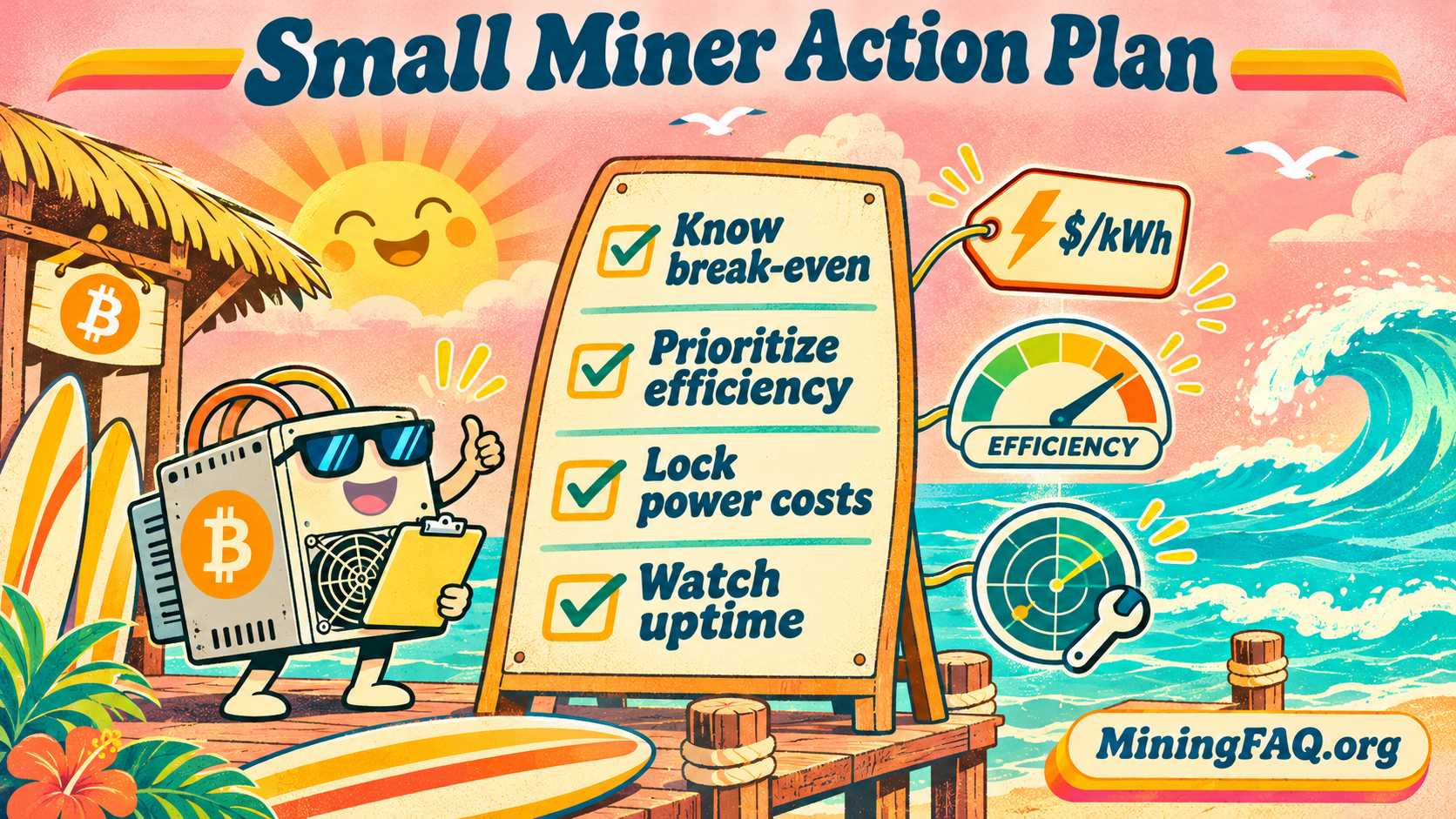
1. Know Your Break-Even Rate
Look up your machine’s efficiency in J/TH and compare it with the table above. If your electricity cost is above your break-even rate, you’re paying to mine. That’s fine if you have a reason, like using the heat, but it should be a conscious choice.
2. Retire or Relocate Old Hardware
If you’re running S19-generation machines on home power, I’d be blunt: their time is up. Unless you have very cheap electricity or a use for the heat, consider selling them, moving them to a cheaper site or replacing them. Cassys looks at this exact question in Best ASIC Miners to Consider Before 2027: Are Newer Machines Worth the Upgrade?, which is a useful read if you’re weighing an upgrade.
3. Prioritize Efficiency Over Raw Hashrate
When you buy new hardware, look at J/TH first. OneMiners’ guide to Bitcoin mining after the halving recommends machines below 15 J/TH, and the numbers above show why. An efficient machine has room to absorb difficulty increases and price drops. An inefficient one doesn’t.
4. Lock In Your Power Costs
You cannot control Bitcoin’s price, network hashrate or the next difficulty adjustment. Electricity is one of the largest recurring costs that a miner can actually manage.
That is why professional hosting can become particularly useful when mining margins tighten. OneMiners’ current hosting network lists 17 live data centers across five continents, with long-term prepaid electricity starting around 3.6¢/kWh in Nigeria. Its Georgia and South Carolina facilities currently list seven-year prepaid rates around 4.5¢/kWh, while Dubai starts around 4.6¢/kWh.
OneMiners states that the published location prices include management services and currently reports 98%+ average uptime across its hosting network.
Those figures do not guarantee mining profit. Bitcoin price, transaction fees, difficulty and hardware performance still change. The advantage is more specific: locking in a low electricity price can make one of the largest operating expenses more predictable.
Cassy Soriano’s Medium article, Best ASIC Miners to Consider Before 2027: Are Newer Machines Worth the Upgrade?, is useful alongside this calculation because it looks at hardware upgrades through efficiency, electricity price, resale value and payback period rather than simply asking which miner has the highest hashrate.
5. Plan for the Next Two Years, Not the Next Two Weeks
The October 30 Luxor Hashrate Forward Market curve implied network hashrate around 1,056 EH/s in November, 1,059 EH/s in December, 1,070 EH/s in January 2027 and about 1,100 EH/s by March 2027.
That is a market-implied forecast, not a prediction guaranteed to happen. The important point is that the forward market currently expects the rapid October rebound to pause before modest growth resumes.
Further ahead, Bitcoin’s next halving is expected around 2028, when the block subsidy will fall from 3.125 BTC to 1.5625 BTC. Hardware bought today should therefore be evaluated against more than today’s hashprice.
6. Watch Uptime Closely
When margins are thin, downtime matters enormously. A miner operating at 90% uptime produces roughly 8% less hashing time than one operating at 98%, before considering other differences.
That is another practical advantage of professional hosting and remote monitoring. A provider cannot control Bitcoin’s market conditions, but reliable power, cooling, maintenance and worker monitoring can reduce avoidable downtime.
The Bright Side: A Stronger Network
I don’t want to make this all sound gloomy. As CryptoQuant founder Ki Young Ju said, “higher hashrate means stronger security and better fundamentals as a store of value.” A Bitcoin network running above 1 ZH/s is extraordinarily expensive to attack. That’s good for everyone who holds bitcoin, including miners who are paid in it.
There’s also a practical upside. Hashrate growth tends to slow down when margins tighten, because fewer people buy new machines and some older ones switch off. That’s exactly what the forward curve suggests for the rest of 2026. Small miners who are efficient and have low power costs can ride out these periods and benefit when conditions improve.
Frequently Asked Questions
What does 1 ZH/s mean? It means the Bitcoin network is performing one sextillion (1,000,000,000,000,000,000,000) hashes per second, or 1,000 EH/s.
Why did Bitcoin’s hashrate go back above 1 ZH/s? Mainly because curtailed machines came back online after summer, September brought better miner revenue, newer machines are more efficient and secondhand hardware from AI-focused miners was redeployed.
Does higher network hashrate mean my miner earns less? Not instantly. If more hashrate joins the network, blocks tend to arrive faster first. At the next difficulty adjustment, the protocol usually raises difficulty, and then a miner with unchanged hashrate earns less bitcoin per unit of time, all else equal. Bitcoin price and transaction fees can still offset or amplify that effect.
Can an S19j Pro still have a positive electricity margin? At today’s roughly $33/PH/day hashprice, a 100 TH/s S19j Pro at about 30.5 J/TH reaches electricity-only break-even near 4.4¢/kWh after an illustrative 2% pool fee. Once hardware cost, downtime and other expenses are included, the economics become even tighter.
Will hashrate keep rising? Market forecasts suggest it stays fairly flat through year-end and starts growing again in early 2027. Over the long term, Bitcoin’s hashrate has almost always trended up.
What’s the best move for a small miner right now? Know your break-even power rate, prioritize efficient hardware and lock in low, stable electricity costs.
The Bottom Line
Bitcoin’s return above 1 ZH/s is a sign that the mining network has recovered strongly from its 2026 summer slowdown. Difficulty has climbed 16.4% from the September 5 level, while spot hashprice has fallen from above $40/PH/day in late September to roughly $33/PH/day as of November 4.
For small miners, that creates a tougher but very uneven environment. Older hardware such as the S19j Pro has almost no electricity-cost margin even on inexpensive power, while efficient machines such as the S21 XP and S23 Hydro retain considerably more room.
The lesson is not that small-scale mining is finished. It is that efficiency, electricity cost and uptime matter more as network competition rises.
For miners who do not have access to industrial electricity or suitable infrastructure at home, providers such as OneMiners can be worth comparing because professional hosting combines lower published power rates with cooling, management and remote infrastructure. That does not remove mining risk, but it can help control some of the operating variables that miners can actually influence.
Before buying or relocating any ASIC, use the exact hardware price, current hashprice and your real all-in electricity rate rather than relying on an old profitability snapshot.
This article is for educational purposes only and is not financial advice. Hashrate, difficulty, hashprice and Bitcoin’s price change constantly. Always check live data before buying hardware or changing your setup.