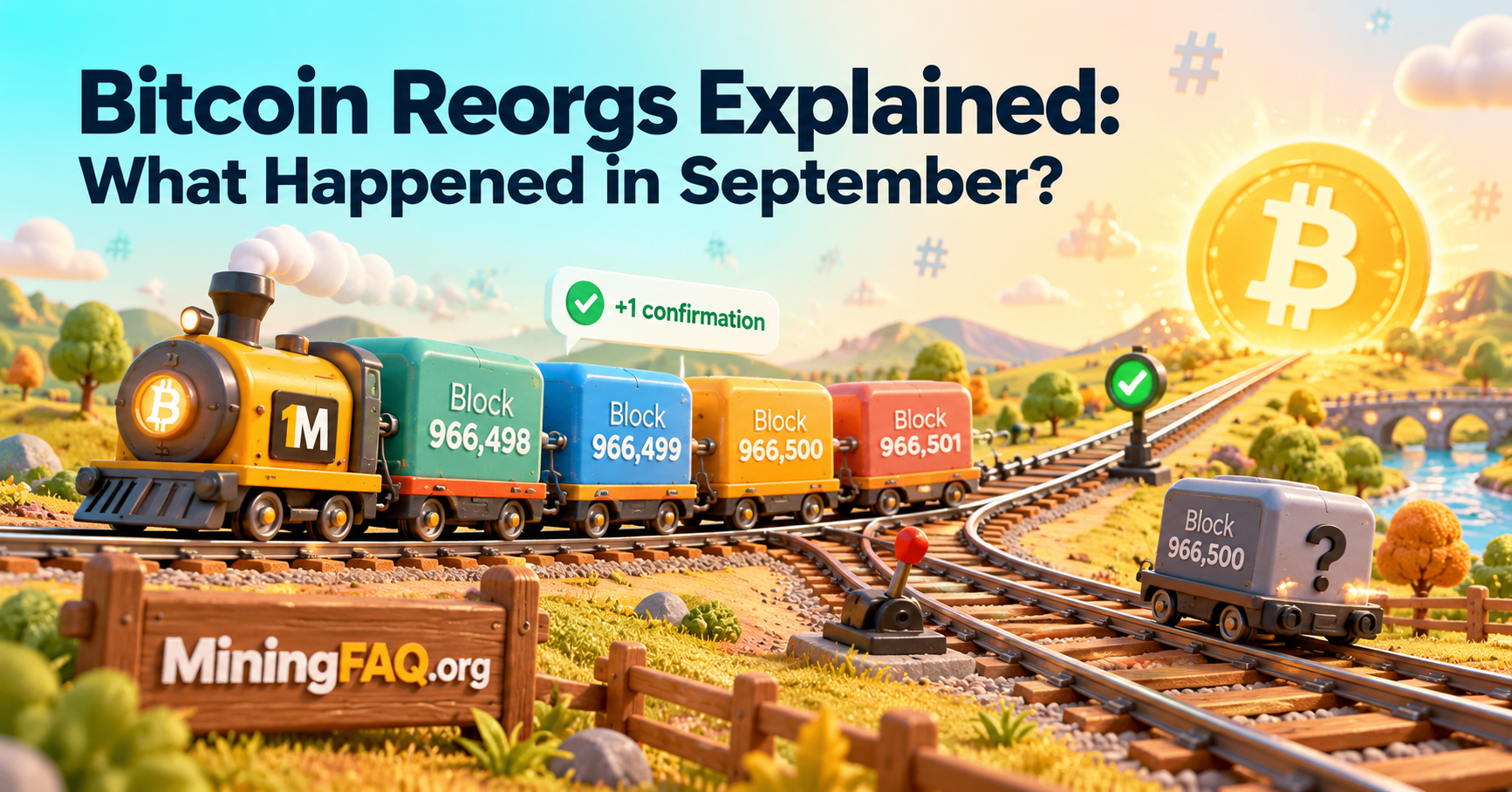
On the morning of September 11, 2026, two of Bitcoin’s largest mining pools found a valid block at the same height, within moments of each other. For a short time the network had two competing versions of the latest block. Then the next block settled it: AntPool’s block stayed in the chain, and SpiderPool’s block, worth about 3.14 BTC, was thrown away.
It was the third one-block “reorg” in roughly four weeks, and it sparked a wave of headlines. If you hold bitcoin, accept bitcoin payments or run mining hardware, it is natural to wonder whether this is a warning sign.
The short answer is no, but the details are worth understanding. This guide explains what a Bitcoin reorg is, exactly what happened in September, why reorgs happen and what they mean for everyday users and miners.
Key Takeaways
- A reorg (chain reorganization) happens when the network briefly has two competing versions of the latest block(s), then switches to the branch with the most accumulated proof of work.
- On September 11, 2026, at block 966,500, AntPool and SpiderPool both found valid blocks. AntPool’s branch won, and SpiderPool’s roughly 3.1389 BTC reward was discarded.
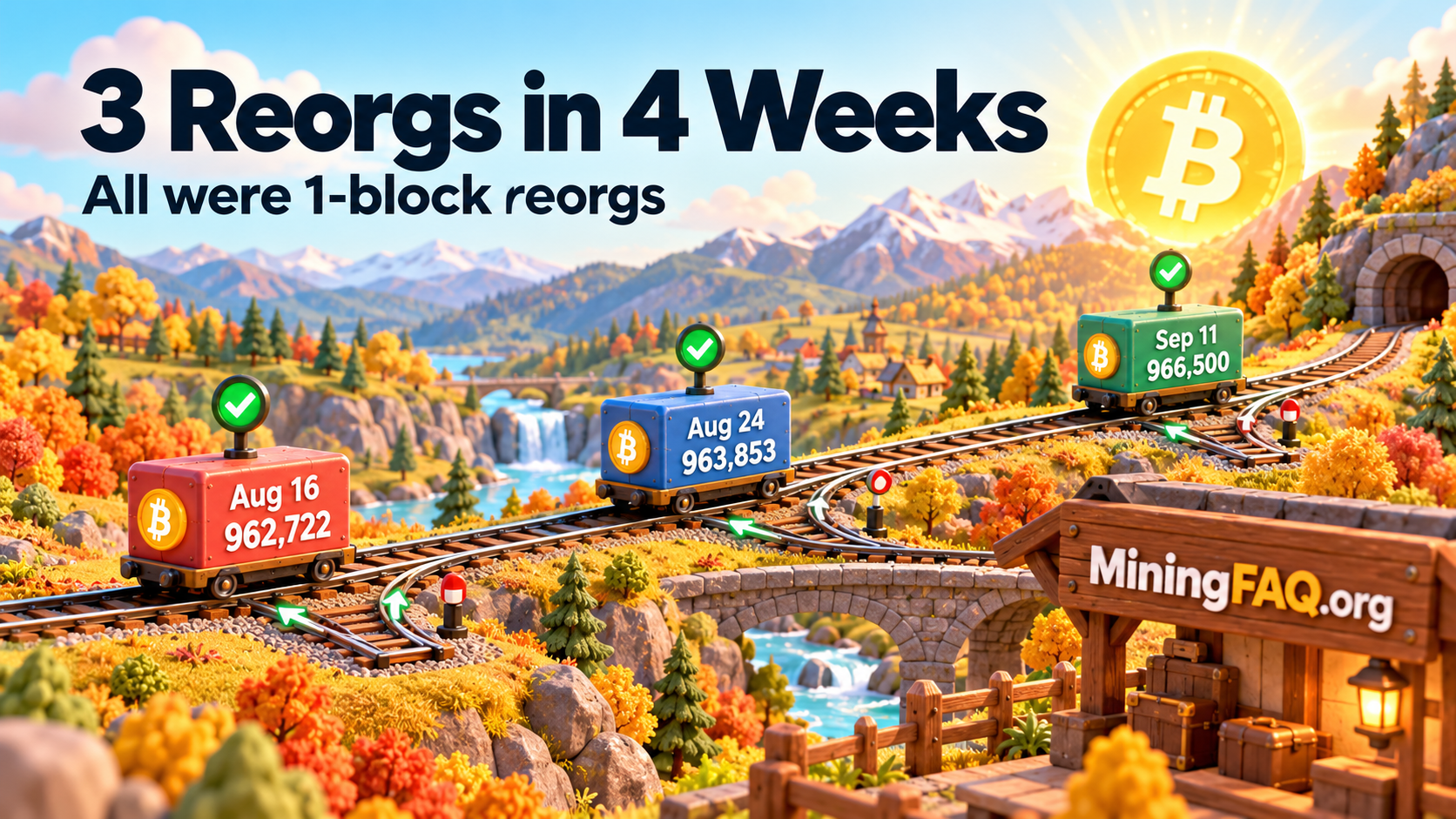
- It was the third one-block reorg in four weeks, after reorgs at heights 962,722 (August 16) and 963,853 (August 24).
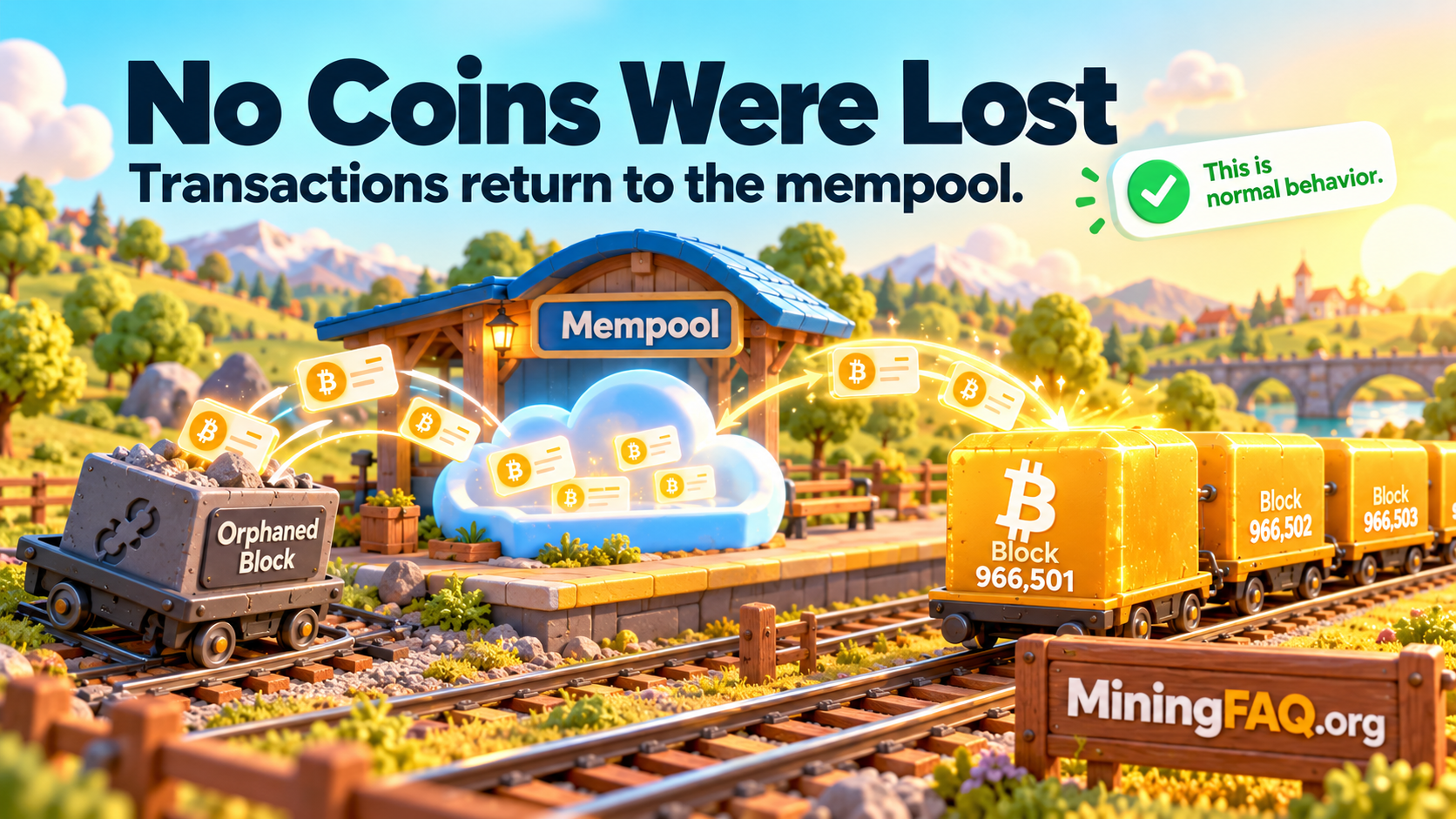
- No coins were lost and no double-spend occurred. Transactions from the losing block returned to the mempool to be confirmed again.
- One-block reorgs are normal Bitcoin behavior, not an attack. Waiting for several confirmations on large payments keeps you safe.
What Is a Bitcoin Reorg?
Bitcoin is a shared ledger made of blocks, each linked to the one before it by a cryptographic hash. If you want a refresher on how that ledger fits together, OneMiners explains it clearly in What Is the Blockchain? The Bitcoin Ledger Explained.
Every node on the network follows one simple rule: the valid chain with the most accumulated proof of work is the real one. Most of the time, there is only one candidate. But occasionally two miners find a valid block at the same height almost simultaneously. For a few seconds or minutes, some nodes see block A first and others see block B first. The chain has temporarily split into two branches.
The tie breaks as soon as the next block is found. Whichever branch gets extended first now has more total work, and every node switches to it. Nodes that had been following the other branch “reorganize”: they drop the losing block and adopt the winning branch. That switch is a reorg, and the abandoned block is called an orphaned or stale block.
Why Reorgs Happen
Reorgs are a built-in side effect of how Bitcoin mining works. Miners all over the world are racing to find a hash below the network target, a process OneMiners walks through step by step in Proof of Work Explained. Two factors make occasional ties inevitable:
- Blocks are found randomly. The average is one every 10 minutes, but sometimes two arrive only seconds apart.
- Information takes time to travel. A new block has to propagate across thousands of nodes on several continents. During those seconds, another miner who has not yet seen the new block can still find a competing one.
Neither of these is a bug. They are the cost of running a global, permissionless network with no central timekeeper. The most-work rule exists precisely so that the network can resolve these ties automatically, without anyone in charge.
What Happened in September 2026
As Crypto Economy reported, the September event unfolded like this:
-
Block 966,500: SpiderPool and AntPool each mined a valid block on the same parent block at nearly the same time, and the two blocks reached different parts of the network first.
-
Block 966,501: AntPool found the next block on top of its own branch. That gave AntPool’s chain more accumulated work, so nodes switched to it.
-
The result: SpiderPool’s block was orphaned and its estimated reward of about 3.1389 BTC was never paid. AntPool’s winning block paid about 3.1411 BTC.
Galaxy Research, which flagged the event on X, described it as “a small 1 block reorg” and noted that its own node did not even see the AntPool block until it was already confirmed and the chain had moved on. Analysts attributed the reorg to normal proof-of-work behavior under global network latency, not to an attack or a security flaw.
NexusPool’s breakdown of the reorg adds two important points. First, transactions in SpiderPool’s block that AntPool’s block did not include simply returned to the mempool and were confirmed later. Second, no double-spend occurred. The rule every node follows resolved the split exactly as designed.
Recent Bitcoin Reorgs at a Glance
| Date | Block height | Depth | What happened |
|---|---|---|---|
| March 23, 2026 | 941,881 | 2 blocks | Foundry’s branch beat competing blocks from AntPool and ViaBTC |
| August 16, 2026 | 962,722 | 1 block | One-block reorg flagged by Galaxy Research |
| August 24, 2026 | 963,853 | 1 block | One-block reorg flagged by Galaxy Research |
| September 11, 2026 | 966,500 | 1 block | AntPool’s block won; SpiderPool’s ~3.14 BTC block orphaned |
The March event was rarer. Two blocks were replaced because Foundry, Bitcoin’s largest pool, found several blocks in a row on its own branch. Even then, CoinDesk reported that transactions in the orphaned blocks were not lost.
Should You Worry? It Depends on Who You Are
If You Hold or Send Bitcoin
For most users, a one-block reorg changes nothing. Your coins do not disappear. If your transaction sat in an orphaned block, it goes back into the mempool and is normally included in one of the next blocks, often the very next one.
The real lesson is about confirmations. Each block added on top of your transaction makes it harder to reverse. The Bitcoin developer guide on payment processing explains that the newest block is replaced fairly often by accident, so a single confirmation still carries some risk. It recommends waiting for at least six confirmations (about an hour) before treating high-value payments as final, while noting that the number is “somewhat arbitrary.”
| Confirmations | What it means | Good for |
|---|---|---|
| 0 | Broadcast, not yet in a block | Only trusted parties or tiny amounts |
| 1 | In the latest block, can still be reorged | Small everyday payments |
| 2–3 | A reorg this deep is very rare | Medium-value payments |
| 6+ | About an hour of network work protects it | Large payments, exchanges |
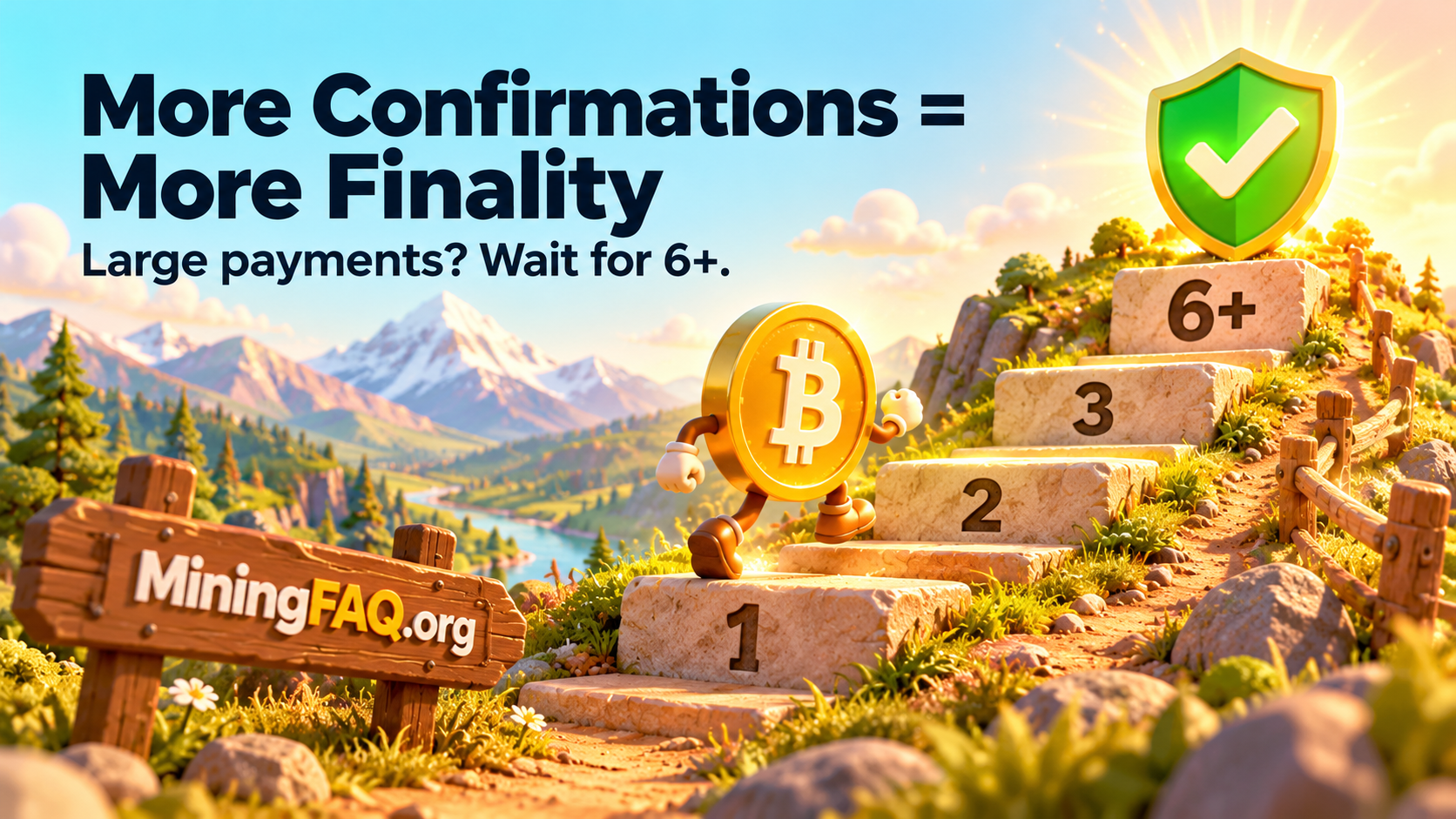
The math behind this comes straight from the Bitcoin white paper. An attacker with 10% of the network’s hashrate has about a 20% chance of overtaking a transaction with one confirmation, but only about 0.02% after six. All three recent one-block reorgs would have had zero effect on anyone who waited for two or more confirmations.
If You Run a Merchant or Exchange
Reorgs are a reminder to set confirmation requirements by transaction value. Watch for forks, where peers report different block hashes at the same height, and pause large withdrawals if a fork ever extends beyond two blocks, as the developer guide suggests.
If You Mine Bitcoin
This is where reorgs have a real cost. When a block is orphaned, the miner who found it receives nothing for it. For SpiderPool, that meant losing a block reward worth more than $250,000 at today’s prices.
How much that matters depends on how you mine:
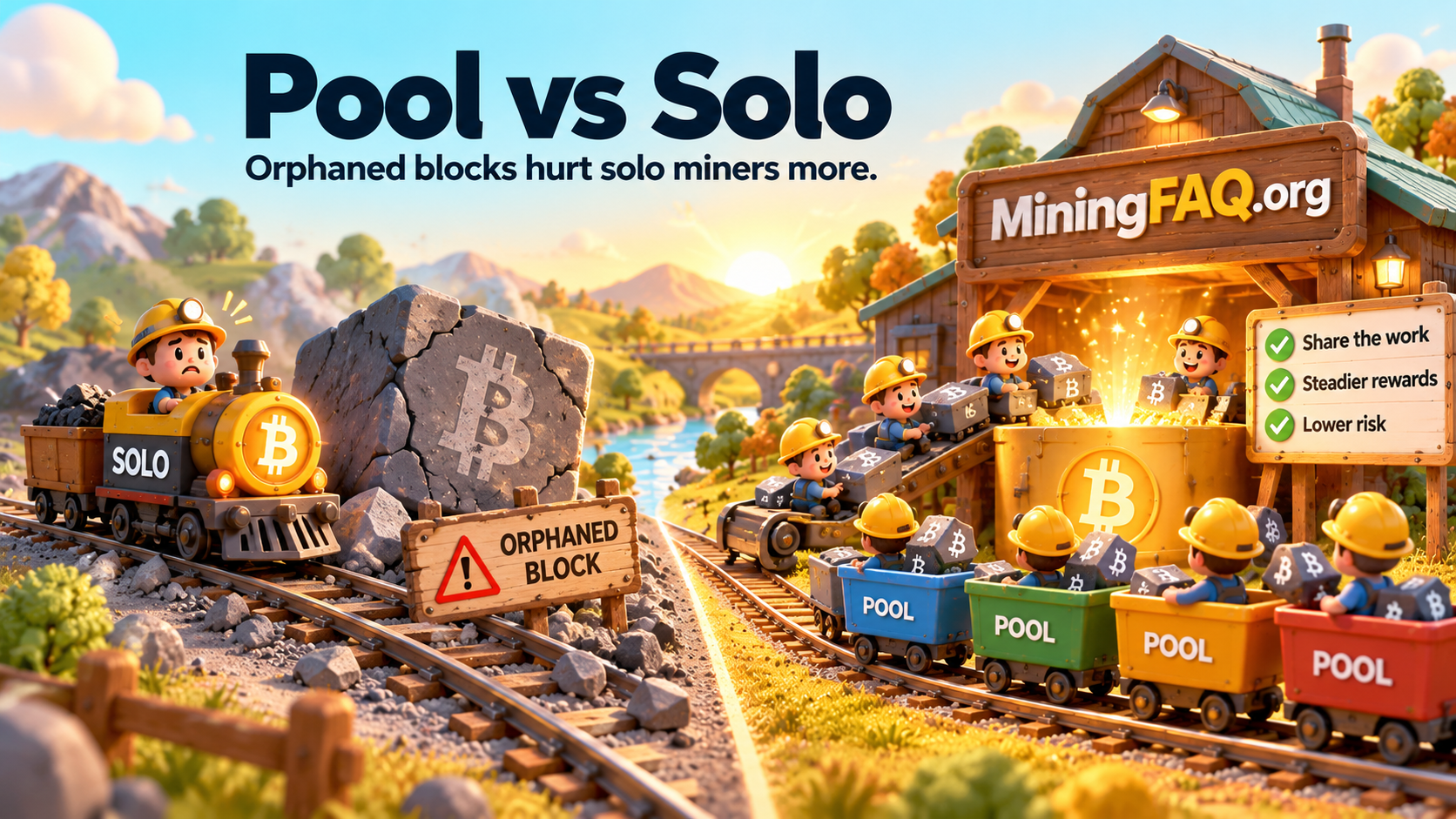
- Pool miners are largely shielded. Pools absorb orphaned blocks across thousands of blocks, and on FPPS-style payouts you are paid per share whether or not a particular block survives. A reorg barely registers in your daily earnings.
- Solo miners carry the full risk. As NexusPool points out, a solo miner whose block lands on the losing side loses the entire reward, no matter how small or large their operation.
Bitcoin’s rules also prevent miners from spending newly created coins until their block is 100 blocks deep. That rule exists precisely so that a reorg cannot leave freshly minted bitcoin circulating after its block has disappeared.
Why So Many Reorgs Recently?
Three one-block reorgs in four weeks is more than usual, and analysts are watching closely. Possible contributing factors include:
- Mining concentration. A handful of very large pools now find most blocks, so ties between big pools are more likely to involve large competing branches.
- Network latency between major pools. Galaxy Research plans to monitor how quickly blocks travel between the top pools to see whether delays are raising the orphan rate.
- Plain randomness. Block discovery is random, and short clusters of reorgs can happen by chance.
What matters most is that none of these events was an attack. That sets Bitcoin’s reorgs apart from smaller networks. Bitcoin.com News pointed to Monero, where a single large miner released a withheld chain that replaced 18 blocks, and to Bitcoin SV, which suffered a 100-block reorg in 2021. Bitcoin, with roughly 1 zettahash per second of hashrate behind it, would require billions of dollars in hardware for anyone to attempt something similar.
What It Means for Miners in 2026
The September reorg landed during an otherwise encouraging period for miners. September 2026 brought miners their best revenue month since January, as Cassys covers in Bitcoin Mining Revenue Hits Its Best Month Since January: Is Mining Profitable Again?
For most miners, the practical takeaways are simple:
- Use a reputable pool with good network connectivity and a payout method that pays per share.
- Avoid solo mining as your main income unless you can absorb the occasional lost block.
- Focus on what you control: efficient hardware, uptime and low electricity costs.
That last point is where hosting helps. OneMiners runs ASICs in professional facilities with fixed electricity rates starting around $0.0364/kWh, 24/7 monitoring and a 7-year hardware warranty, so your machines stay online and pointed at a pool. Reorgs come and go, but every hour of downtime or every cent of extra power cost hits your earnings directly.
Frequently Asked Questions
What is a Bitcoin reorg in simple terms? It is when the network briefly has two competing versions of the latest block, then switches to the branch with more proof of work. The losing block is discarded.
Did anyone lose bitcoin in the September 2026 reorg? No user funds were lost and no double-spend occurred. SpiderPool lost its block reward of about 3.14 BTC because its block was orphaned.
How often do Bitcoin reorgs happen? One-block reorgs happen occasionally and are considered normal. Deeper reorgs, like the two-block event in March 2026, are much rarer.
How many confirmations should I wait for? One is usually fine for small payments. For large payments, the common standard is six confirmations, about one hour.
Is a reorg the same as a 51% attack? No. A one-block reorg is a natural tie between honest miners. A 51% attack is a deliberate attempt to rewrite history using a majority of hashrate.
Do reorgs affect pool miners’ earnings? Barely. Pools spread the occasional orphaned block across all members, and per-share payout methods pay you regardless.
The Bottom Line
Bitcoin’s September reorg made headlines, but it was the system working exactly as designed. Two honest miners found blocks at the same time, the network picked the branch with more work and everyone moved on. No coins were lost, transactions were reconfirmed and the only cost fell on the miner whose block lost the race.
So should you worry? Not if you wait for sensible confirmations before treating a payment as final, and not if you mine through a reputable pool. Reorgs are a reminder that Bitcoin settles through proof of work over time, and every new block makes past transactions more secure.
Mining Bitcoin yourself? Use the MiningFAQ Profitability Calculator to see how hardware, power costs and hosting affect your earnings.
This article is for educational purposes only and is not financial advice. Network conditions and block data can change quickly, so always check live sources before making decisions.